Part 3 of the Leadership at the Threshold Philadelphia Campaign Series
Shortly before midnight on September 20, 1777, Continental Army Brigadier General Anthony Wayne confronted a nightmare familiar to military commanders and institutional leaders alike.
The threat he was watching had found him first.
Following the Continental Army’s defeat at the Battle of Brandywine on September 11, some 1500 soldiers in Wayne’s eight Pennsylvania Continental regiments remained in position at a wooded encampment near The Paoli Tavern in present day Malvern, Pennsylvania. Their assignment was to harass the British who were encamped about four miles away in Tredyffrin Township, around present day Devon.
Wayne, whose home of Waynesborough was only a few miles away also in present day Paoli, believed that the British army did not know his location.
That assumption was wrong.
Some 1200 British forces under Major General Charles Grey approached Wayne’s encampment in the late night and wee hours of the morning, while the Continental Army soldiers were sleeping, and launched a devastating attack.
Grey told his troops to remove the flints from their guns and not fire a shot but to just use their bayonets so as not to wake the Patriot troops. The Americans were surprised and routed. The British bloodily and brutally killed 53 Continental Army soldiers with their bayonets, while another 200 were wounded or taken prisoner. The Patriots then gave Grey a nickname that stuck with him— “No Flint” Grey. Only a few British soldiers were killed or wounded.
The episode quickly became known in American memory as the Paoli Massacre or the Battle of Paoli.
But through The Threshold Framework™, Paoli raises a leadership question that reaches well beyond the battlefield:
What happens when the assumption protecting your organization proves false?
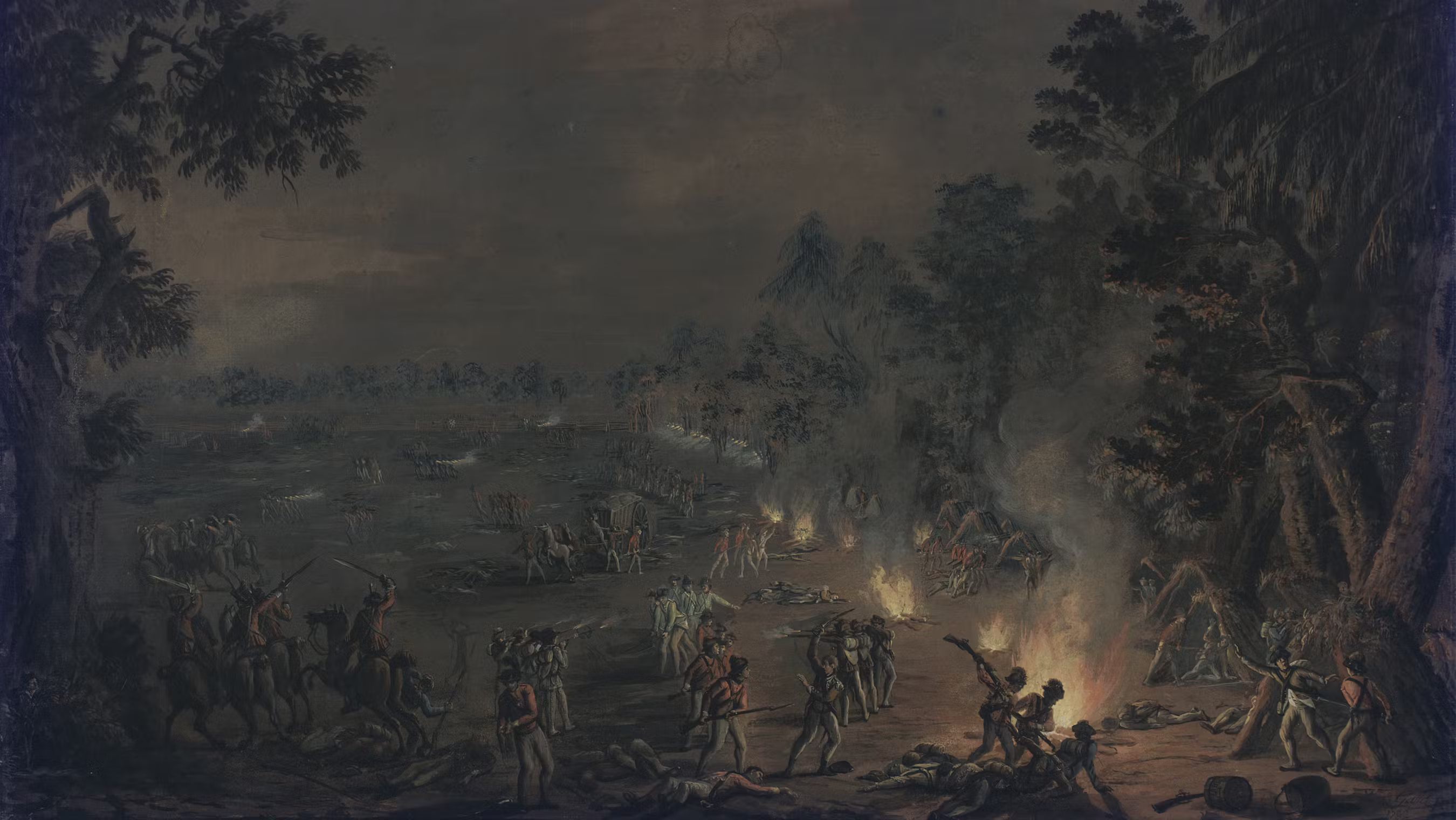
The Battle of Paoli (or a Dreadful Scene of Havoc), Xavier Della Gatta, 1782
When the Mission Changes Instantly
Before the British attack, Wayne had an offensive purpose.
His troops were positioned to threaten and harass British operations.
Once Grey attacked, that objective disappeared.
The immediate question became survival.
That is Clarity Under Pressure compressed into minutes.
Organizations can experience the same sudden shift.
A cyberattack.
A financial disclosure.
An active threat.
A major executive resignation.
An unexpected court ruling.
Yesterday’s objective can become irrelevant almost instantly.
Threshold leadership requires the ability to recognize that change faster than the organization around you.
Morale After Shock
The second Threshold pillar is Morale as Strategy.
Paoli shows us a side of morale that is sometimes overlooked:
How does an organization interpret trauma?
Shock creates narratives.
We failed.
We were betrayed.
Leadership was negligent.
We cannot recover.
Or:
We learned.
We survived.
We will be ready next time.
Leaders cannot always determine what happens to an organization.
But they have enormous influence over what the organization decides the experience means.
Geography Is Also What the Other Side Knows
The most important Paoli lesson may come through Geography Matters.
Wayne understood where his troops were.
But that was not enough.
Leadership required understanding what the British knew about where his troops were.
That distinction translates directly to modern leadership.
What does your competitor know?
What can opposing counsel discover?
What can a regulator see?
What vulnerability would an attacker identify?
What are you assuming is private, protected or invisible?
The most dangerous landscape is sometimes the one we think no one else can see.
Preparation Before Certainty
Paoli also illustrates Delay Is a Decision.
There are risks that cannot wait for absolute confirmation.
Security.
Cybersecurity.
Crisis planning.
Succession.
Reputational exposure.
Sometimes preparedness must precede certainty.
The right leadership question may be:
What precaution will we wish we had taken if our assumption turns out to be wrong?
Accountability Is Symbolic Leadership
After Paoli, questions arose about Wayne’s conduct.
He ultimately insisted upon a court-martial to address the accusations against him.
That makes Paoli especially relevant to Symbolic Leadership.
What leaders do when their judgment is questioned communicates something important about institutional culture.
Do they hide?
Deflect?
Blame?
Or submit their conduct to examination?
Accountability itself sends a message.
Paoli is therefore more than a story about surprise.
It is a story about assumptions.
And its deepest leadership question may be this:
What are we assuming is safe simply because it has not failed yet?
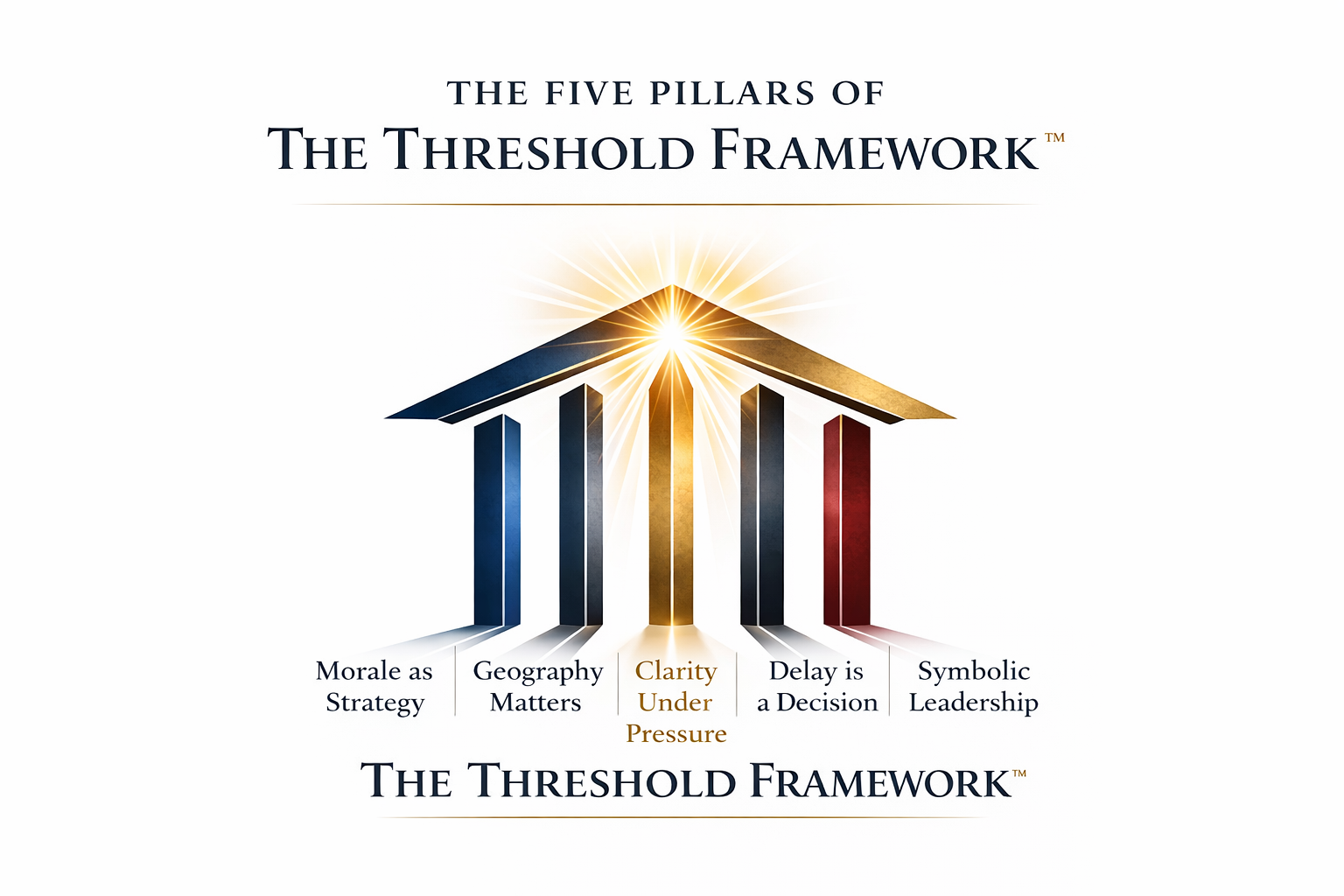
For more information about The Threshold Framework.

My book, Threshold to Valley Forge: The Six Days of the Gulph Mills Encampment


Leave a Reply