By Sheilah Vance
What happens when a war for independence comes to your backyard? What happens when the great events of history interrupt the ordinary lives of families, neighbors, and communities? And what happens when people who never expected to become part of history suddenly find themselves making decisions that will change their lives forever?
Ten years ago, in 2016, I published Becoming Valley Forge, an award-winning historical novel about the Philadelphia Campaign of the American Revolution and the ordinary people whose lives were transformed by it.
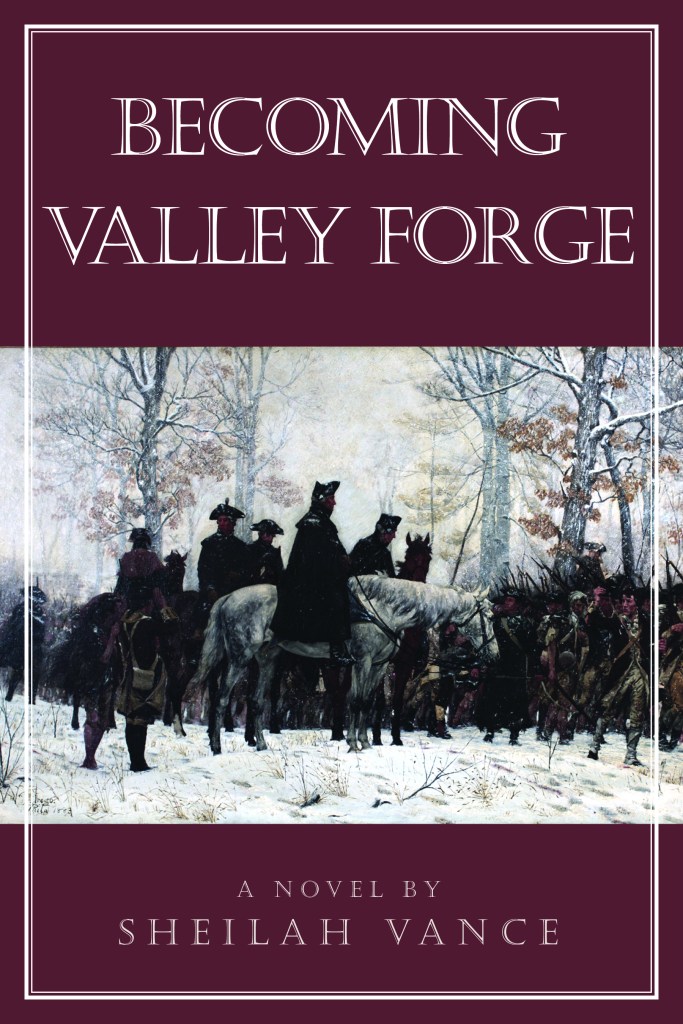
The novel was inspired by a question that had fascinated me for years: What was it like to live in southeastern Pennsylvania in 1777, when the Revolutionary War literally arrived at your doorstep?
We know the names of the generals. We know the battles. We know that George Washington and the Continental Army eventually spent the winter at Valley Forge.
But what about the people who lived there?
What about the families whose sons went off to fight? The farmers whose land became battlegrounds? The tavern keepers who served soldiers and gathered intelligence? The women who struggled to survive in British-occupied Philadelphia? The free and enslaved African Americans who had to decide what a revolution proclaiming liberty might mean for them?
What happened to their lives when the war came to their backyards?
Those were the stories I wanted to tell.
And ten years later, as we approach the 250th anniversary of the Philadelphia Campaign in 2027, I believe those stories deserve to be told again.
The Philadelphia Campaign: More Than a Series of Battles
The Philadelphia Campaign was one of the most consequential military campaigns of the American Revolution.
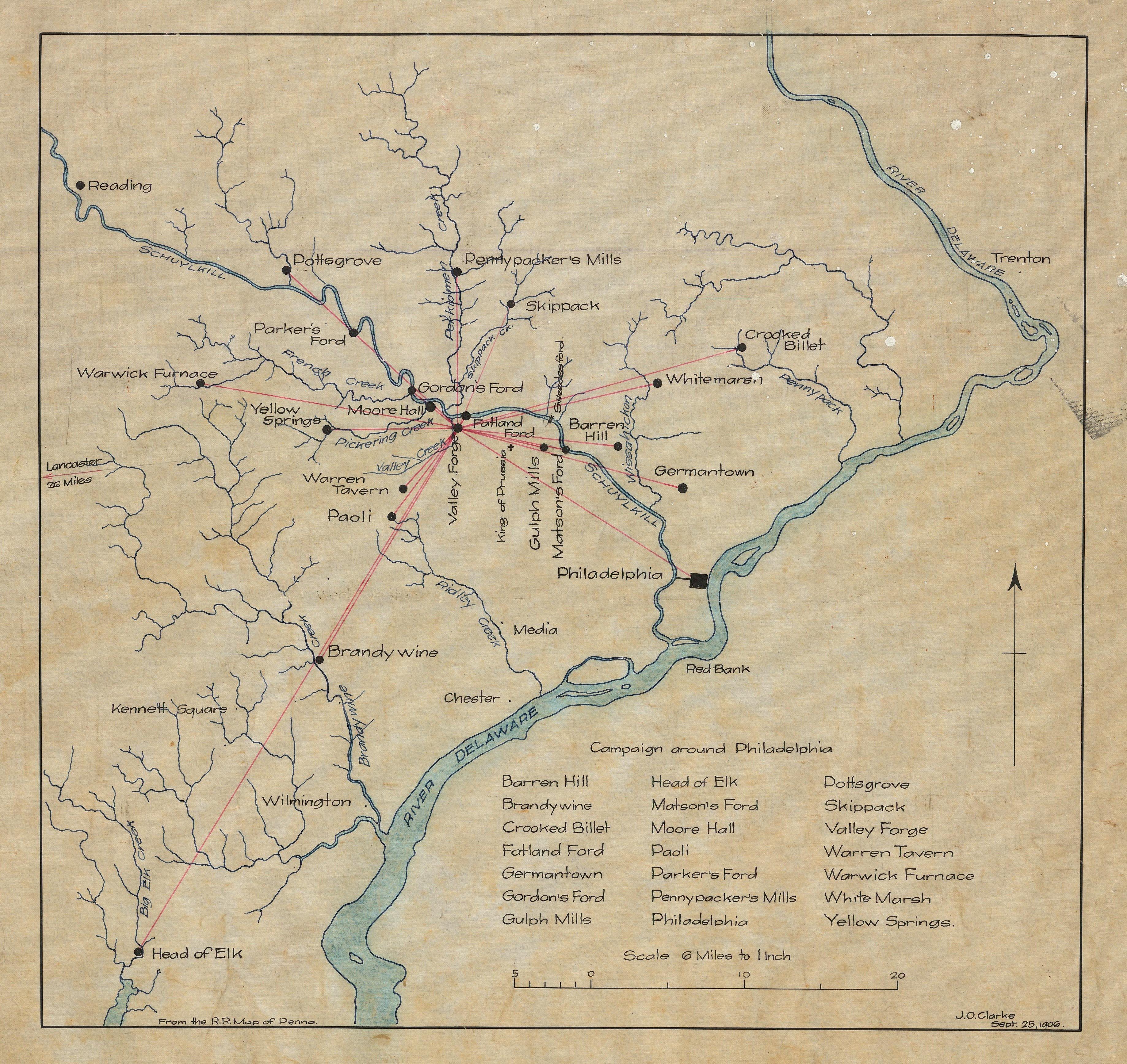
For the purposes of my novel, the story begins on September 11, 1777, with the Battle of Brandywine, when British forces under General William Howe defeated Washington’s army and opened the way toward Philadelphia.
But Brandywine was only the beginning.
The campaign continued through the Battle of the Clouds, the Paoli Massacre, the British occupation of Philadelphia, the Battle of Germantown, the Battle of Whitemarsh, the confrontation at Matson’s Ford, and the Continental Army’s encampment at Gulph Mills.
On December 19, 1777, Washington and his soldiers marched into Valley Forge, where they would spend the next six months.
And on June 19, 1778, the army marched out of Valley Forge, prepared to resume the fight.
Between those two dates—September 11, 1777, and June 19, 1778—the Philadelphia region became a landscape of war.
Armies marched across farms and through villages. Soldiers occupied homes and requisitioned supplies. Families faced divided loyalties. Commerce was disrupted. Communities were forced to accommodate the presence of armies whose movements they could neither predict nor control.
For the people who lived in Chester, Montgomery, Delaware, and Philadelphia Counties, the Revolution was not an abstract debate about independence.
It was happening outside their windows.
And sometimes, it was happening inside their homes.
That is the world of Becoming Valley Forge.
One Family. One War. Lives Forever Changed.
At the heart of Becoming Valley Forge is a family from Paoli, Pennsylvania, whose members experience the Revolution in very different ways.
Two young men, Fred and Allen Roberts, enlist in the Continental Army under their neighbor, General Anthony Wayne. They enter the war with their own ideas about patriotism, duty, and adventure, only to discover the brutal realities of military service.
Their family operates a tavern in Paoli, a place where travelers, soldiers, neighbors, and information intersect. As the war moves closer, the tavern becomes more than a business. It becomes a place where loyalties are tested and the dangers of war reach into everyday life.
Then there is Connie, the family’s outcast daughter, who has left home and established a very different life in Philadelphia.
Connie operates a brothel in the city, where British officers become part of her world. Her relationship with British General William Howe places her close to the center of British power, but it also forces her to confront difficult questions about survival, loyalty, family, and the choices available to women in a society that offers them limited independence.
And on Rebel Hill, near Gulph Mills, two other men confront the Revolution from different perspectives.
Daniel is a white farmer whose responsibilities to his family make him reluctant to enlist.
James is a formerly enslaved Black man and blacksmith who understands the contradictions of a revolution being fought in the name of liberty while slavery remains an accepted institution.
When the Continental Army arrives in their community following the events at Matson’s Ford, both men must reconsider their futures.
Their decisions ultimately draw them into the Patriot cause.
These characters do not experience the Revolution in the same way.
For some, it is an opportunity.
For others, it is a threat.
For some, independence represents a promise.
For others, it raises questions about who will actually enjoy the freedom for which the war is being fought.
Yet their lives become intertwined as the Philadelphia Campaign unfolds.
And eventually, their stories converge at Valley Forge.
That is why I called the novel Becoming Valley Forge.
The title is not simply about a place.
It is about people becoming something different because of the extraordinary circumstances in which they find themselves.
History Happens to Ordinary People
One of the things that has always troubled me about the way we sometimes teach history is that we focus so much on great leaders and decisive battles that we overlook the people who had to live with the consequences.
We remember Washington, Howe, Wayne, Lafayette, and the other military leaders.
But armies do not march through empty landscapes.
They march through communities.
They occupy places where people have built homes, raised children, established businesses, cultivated farms, and imagined futures.
When an army arrives, those futures can change overnight.
A farmer may become a soldier.
A tavern keeper may become an intelligence source.
A young woman may find herself navigating the dangerous intersection of war, sexuality, economics, and power.
A formerly enslaved man may confront the extraordinary contradiction of fighting for a nation’s freedom while knowing that the freedom of people like him remains uncertain.
These are not peripheral stories.
They are central to understanding the American Revolution.
Historical fiction gives us an opportunity to explore those experiences in ways that military histories sometimes cannot.
Through imagined characters living within documented historical events, we can ask what people might have felt, feared, hoped for, and sacrificed.
We can explore the personal consequences of decisions made by generals and governments.
And we can remember that history is not simply something that happens in capitals and on battlefields.
It happens in kitchens, taverns, bedrooms, churches, fields, and along the roads connecting one community to another.
It happens to families.
That is the story I wanted Becoming Valley Forge to tell.
From Becoming Valley Forge to Threshold to Valley Forge
Writing Becoming Valley Forge deepened my interest in the Philadelphia Campaign, but it did not end my exploration of that history.
In many ways, it was only the beginning.
I had grown up on Rebel Hill, in the Gulph Mills area of Montgomery County, Pennsylvania, where Washington and the Continental Army encamped for six days in December 1777 before marching to Valley Forge.
The Revolutionary War was literally part of the landscape of my childhood.
As I continued researching the Philadelphia Campaign, I became increasingly fascinated by those six days.
Why did Washington bring his army to Gulph Mills?
What happened there?
What decisions did he make?
And why had this important encampment received so little attention compared with Valley Forge?
The more I researched, the more I realized that Gulph Mills could not be understood apart from the military campaign that preceded it.
Washington arrived at Gulph Mills carrying the consequences of Brandywine, Germantown, Whitemarsh, and the army’s difficult movements across southeastern Pennsylvania.
He had lost Philadelphia.
He had endured military setbacks.
His soldiers were exhausted, inadequately supplied, and uncertain about what would come next.
The decisions he made at Gulph Mills were shaped by everything that had happened during the preceding three months.
And those decisions would help determine what happened at Valley Forge.
That realization became central to my 2025 nonfiction book, Threshold to Valley Forge: The Six Days of the Gulph Mills Encampment.
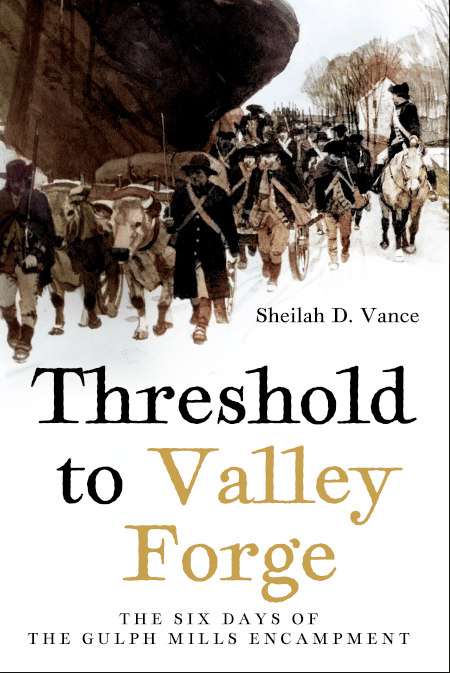
In Becoming Valley Forge, I explored how the Philadelphia Campaign transformed the lives of ordinary citizens.
In Threshold to Valley Forge, I examined how that same campaign brought Washington and the Continental Army to a critical leadership moment.
The two books approach the history from different directions.
One tells the story through the lives of civilians and soldiers.
The other examines the decisions of military leadership.
But both are grounded in the same historical reality: the Philadelphia Campaign was a period of extraordinary uncertainty, when people had to make decisions without knowing how the Revolution would end.
How the Philadelphia Campaign Led to The Threshold Framework™
My research into the Gulph Mills Encampment eventually led me beyond historical writing and into the study of leadership.
As I examined Washington’s decisions during those six days, I began to recognize principles that applied not only to military leadership but also to the challenges facing modern organizations.
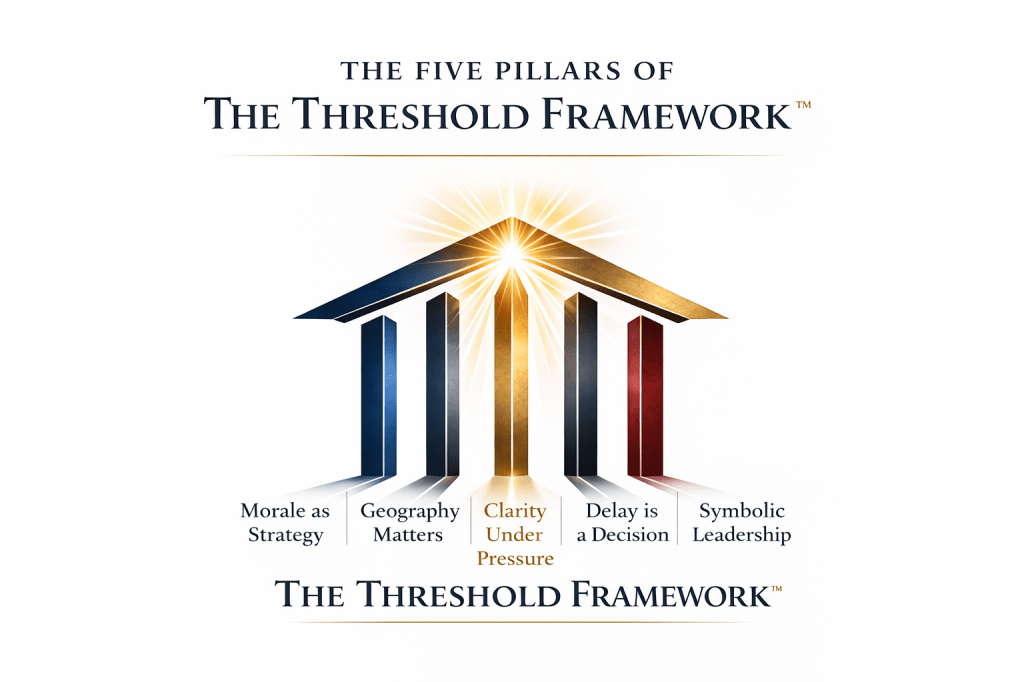
Those insights became the foundation of The Threshold Framework: The Six Days of the Gulph Mills Encampment™, a leadership methodology organized around five pillars:
Clarity Under Pressure. Washington had to distinguish immediate emergencies from the larger strategic objective of preserving his army.
Morale Is Strategy. He understood that the condition and confidence of his soldiers were essential to the army’s continued existence.
Geography Matters. The terrain, roads, river crossings, and proximity to British forces shaped his choices throughout the Philadelphia Campaign.
Delay Is a Decision. When to move, when to remain in place, and when to commit to a course of action were consequential leadership decisions.
Symbolic Leadership. Washington’s actions communicated messages about perseverance, national purpose, and his commitment to the men under his command.
Today, I use The Threshold Framework™ to explore leadership challenges facing law firms, corporations, universities, nonprofit organizations, and other institutions.
But the framework did not emerge in isolation.
It grew out of my effort to understand the Philadelphia Campaign.
And that effort was strengthened by the years I spent researching and writing Becoming Valley Forge.
I find that connection especially meaningful.
A novel about ordinary people confronting the consequences of war eventually helped lead me to a leadership methodology about how people and institutions navigate moments of profound uncertainty.
The historical setting remained the same.
My understanding of its lessons continued to evolve.
2027: The Philadelphia Campaign at 250
Now, as I look toward 2027, I see an extraordinary opportunity.
The year will mark the 250th anniversary of the Philadelphia Campaign.
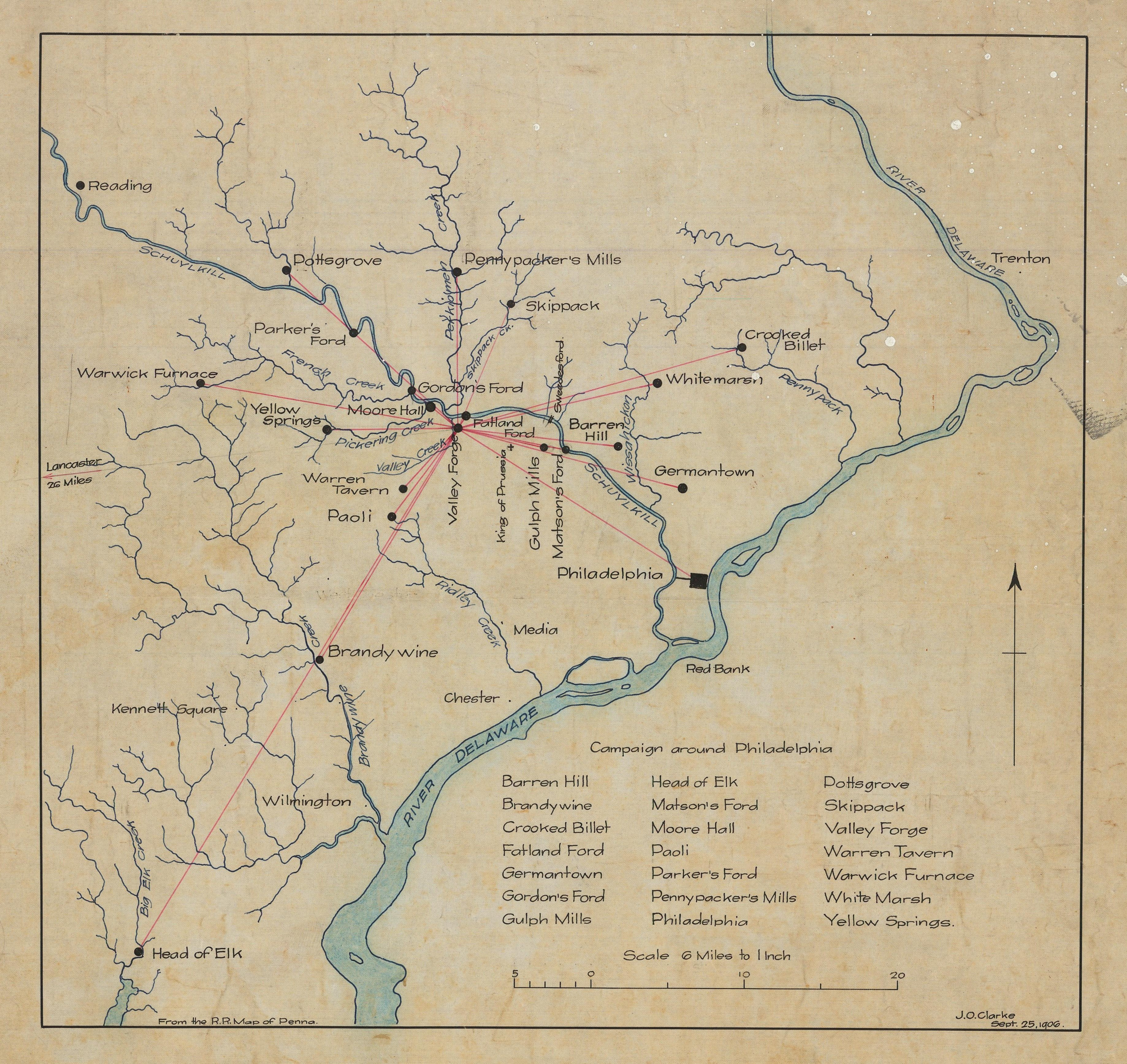
Beginning with the Battle of Brandywine on September 11, 2027, communities across southeastern Pennsylvania will have opportunities to revisit the events that transformed their region during the Revolutionary War.
The commemorations will continue into 2028, culminating in the 250th anniversary of the Continental Army’s march out of Valley Forge on June 19.
For me, this is about much more than remembering military history.
It is an opportunity to tell the broader story of the Philadelphia Campaign.
The story of the farmers whose fields became battlefields.
The story of the families divided by political loyalties.
The story of the women who struggled to protect their families and livelihoods.
The story of the free and enslaved African Americans who confronted the promises and contradictions of American independence.
The story of the communities that experienced the Revolution not as an idea, but as a daily reality.
And, of course, the story of Washington’s army as it moved from defeat and uncertainty toward the transformation that would occur at Valley Forge.
The Philadelphia Campaign deserves to be remembered as a connected historical experience, not simply as a collection of separate battles.
Brandywine mattered to what happened at Paoli.
Paoli mattered to the continuing struggle for Philadelphia.
Germantown and Whitemarsh shaped Washington’s strategic choices.
Matson’s Ford influenced the army’s movement toward Gulph Mills.
Gulph Mills shaped the decisions that preceded Valley Forge.
And Valley Forge became part of the larger story of how the Continental Army emerged prepared to continue the war.
Each event was part of a larger journey. And every stage of that journey affected the people who lived along the way.
That is the story I hope to help bring to life during the 250th anniversary commemorations.
The Next Chapter: Bringing the Philadelphia Campaign Home
Ten years after the publication of Becoming Valley Forge, I find myself returning to the question that inspired the novel in the first place.
What happens when the war comes to your backyard?
But now I am asking another question.
What happens when we bring that history back into the communities where it occurred?
I envision the next chapter of Becoming Valley Forge as something much larger than a traditional book anniversary.
I want to use the 250th anniversary of the Philadelphia Campaign as an opportunity to reconnect readers with the places, people, and experiences that shaped the novel.
I imagine conversations in libraries, historical societies, museums, schools, universities, and community gathering places throughout the Philadelphia region.
I imagine walking through Paoli and discussing the Roberts family, the Battle of Paoli, and the experiences of civilians living near the battlefield.
I imagine conversations about women in British-occupied Philadelphia, using Connie’s fictional story as an entry point into the real experiences of women navigating war, economic survival, and divided loyalties.
I imagine discussions about James, the formerly enslaved Black man in my novel, and the complicated choices facing African Americans during a Revolution that proclaimed liberty but did not end slavery.
I imagine returning to Rebel Hill and Gulph Mills, where I grew up, to explore the historical events that ultimately inspired Threshold to Valley Forge and The Threshold Framework™.
And I imagine bringing all of these stories together in conversations about the Philadelphia Campaign as a whole.
Because the history belongs to more than the generals.
It belongs to the communities where the armies marched.
It belongs to the descendants of the people who lived there.
It belongs to the people who pass these historic places every day without necessarily knowing what happened on the ground beneath their feet.
And it belongs to new generations who deserve to understand the extraordinary history of the places they call home.
I also see opportunities to connect the novel with my continuing work on leadership.
The Philadelphia Campaign offers a remarkable study of decisions made under pressure, not only by Washington and his generals but also by ordinary citizens.
Some people chose to enlist.
Some chose to resist.
Some chose to protect their families.
Some chose to cooperate with the British.
Others struggled to remain neutral.
Every choice carried consequences.
The Threshold Framework™ helps us examine the leadership dimensions of those decisions, while Becoming Valley Forge reminds us of their human dimensions.
Together with Threshold to Valley Forge, the books offer different ways of understanding the same extraordinary period in American history.
One through story.
One through historical research.
And one through the lessons that history offers for the decisions we face today.
Ten Years Later, the Story Is Still Becoming
When I published Becoming Valley Forge in 2016, I hoped readers would discover a different perspective on the American Revolution.
I wanted them to see beyond the familiar images of Washington and his soldiers enduring a difficult winter.
I wanted them to see the people who lived in the shadow of those events.
The families.
The farmers.
The tavern keepers.
The women.
The free and enslaved African Americans.
The ordinary citizens whose lives were changed by a war that arrived without asking their permission.
Ten years later, I remain committed to telling their stories.
And as the Philadelphia Campaign approaches its 250th anniversary, I believe we have a remarkable opportunity to remember not only where the armies fought, but also where people lived.
To understand not only what the generals decided, but also what those decisions meant for families and communities.
To recognize that the American Revolution was not experienced equally, and that the meaning of liberty was contested from the nation’s earliest days.
And to appreciate that the history of the Revolution is not confined to the past.
It continues to shape how we understand freedom, citizenship, leadership, community, and the responsibilities we have to one another.
I began Becoming Valley Forge with a question about what happens when history comes to your backyard.
Ten years later, I am more convinced than ever that the answer matters.
Because before Valley Forge became a symbol of American endurance, the Philadelphia Campaign was a war fought in people’s backyards.
And those people had stories worth telling.
They still do.
Sheilah Vance is an attorney, author, publisher, historical researcher, and leadership strategist. She is the author of Becoming Valley Forge (2016) and Threshold to Valley Forge (2025), and the creator of The Threshold Framework™, a leadership methodology inspired by George Washington’s decisions during the Gulph Mills Encampment of December 1777.
Learn more about Becoming Valley Forge at http://www.becomingvalleyforge.com and Sheilah’s writing and leadership work at http://www.sheilahvance.com and http://www.thresholdtovalleyforge.com.
Both books are available for purchase at Amazon and other booksellers. Email Sheilah at svanceauthor@gmail.com to purchase a signed copy.


Leave a Reply