Summer is over, and I’m back to helping modern leaders with time-tested leadership principles by applying The Threshold Framework to the battles of Revolutionary War’s Philadelphia Campaign, which began on September 11, 1777, with the Battle of Brandywine, about 35 miles outside of Philadelphia.
____
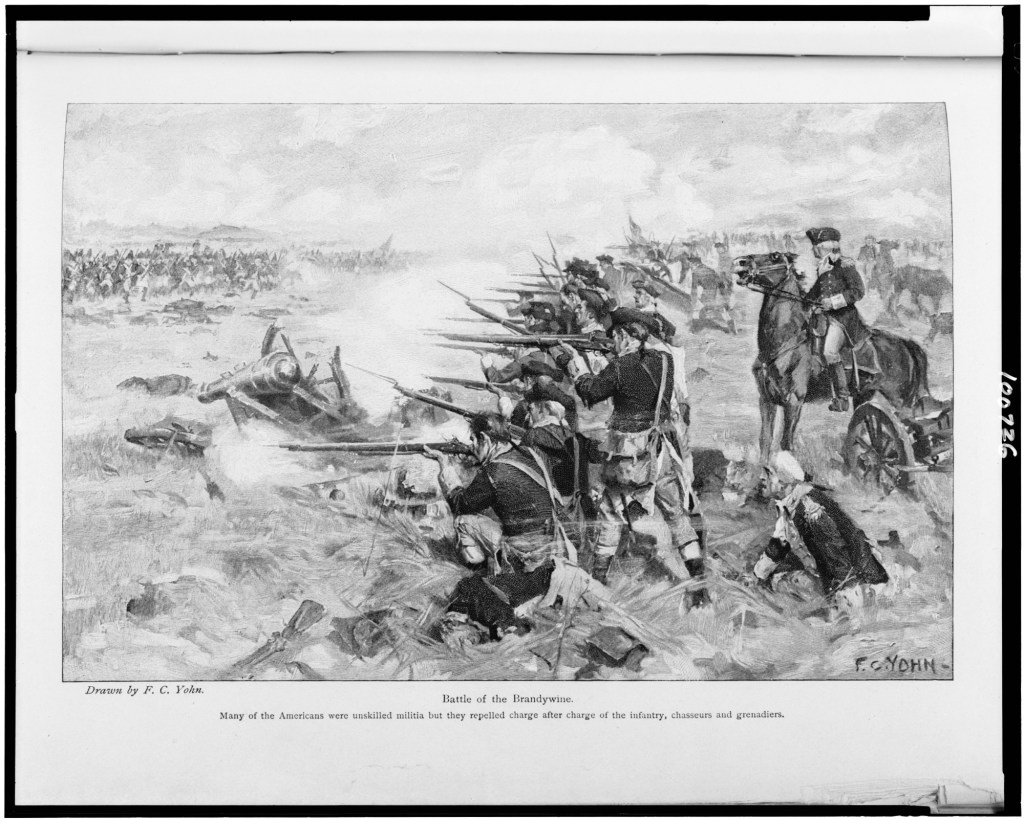
On September 11, 1777, George Washington intended to stop the British advance toward Philadelphia.
He failed.
The Battle of Brandywine was a British victory. General William Howe executed a wide flanking movement around Washington’s right. Washington received conflicting intelligence about British movements, misunderstood important aspects of the terrain, and reacted too slowly to the emerging threat.
By late afternoon, the battle Washington had planned was no longer the battle he was fighting.
And that is where Brandywine becomes more than military history.
It becomes a leadership case study.
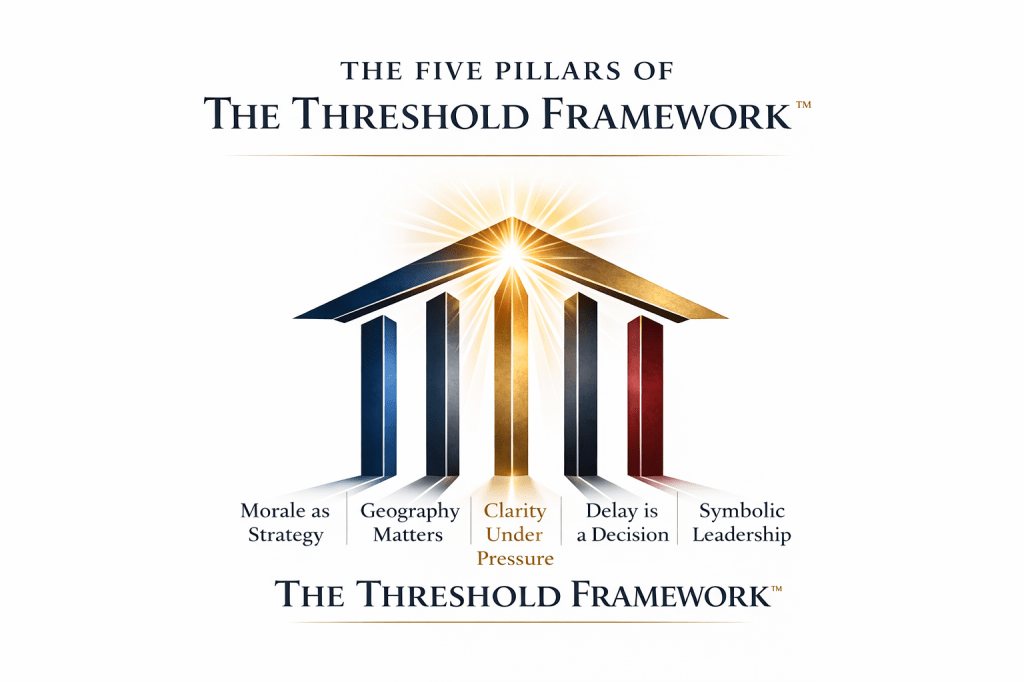
The first principle of The Threshold Framework™ is Clarity Under Pressure.
It asks:
What must not fail?
At the beginning of the day, Washington’s objective was to block the British road to Philadelphia.
Once the American position deteriorated, however, leadership required him to recognize that the objective had changed.
Holding the battlefield could no longer be the highest priority.
Preserving the Continental Army had become more important.
That distinction is fundamental to leadership.
There are moments when continuing to pursue the original objective becomes more dangerous than admitting that circumstances have changed.
A CEO may need to abandon an acquisition.
A university president may need to discontinue a program.
A lawyer may need to recommend settlement rather than continue litigation.
A nonprofit board may need to abandon a beloved initiative in order to preserve the institution itself.
The question changes from:
How do we make the original plan work?
to:
What must we protect now?
Morale When People Know Something Has Gone Wrong
The second pillar of The Threshold Framework is Morale as Strategy.
Brandywine reminds us that morale matters most after people realize that the plan is failing.
American forces were placed under tremendous pressure.
Lines gave way.
Units became separated.
Some troops retreated.
At that point, leadership had to prevent withdrawal from becoming collapse.
Nathanael Greene, John Sullivan, Anthony Wayne, the Marquis de Lafayette and others played important roles in helping the army continue functioning under pressure.
The message was not:
We are winning.
The message became:
We are still an army.
That distinction matters in modern organizations.
Sometimes leaders cannot credibly promise success.
But they can demonstrate order.
Purpose.
Direction.
Presence.
Morale is not pretending that everything is fine.
It is preserving enough confidence for people to keep functioning when everything is not fine.
When Geography Fails You
Brandywine may provide one of the clearest illustrations of the third Threshold principle:
Geography Matters.
Washington did not sufficiently understand the terrain and the possible routes by which Howe could turn his position.
This is an important aspect of the Framework because leadership principles should not merely celebrate what successful leaders did correctly.
They should identify what happens when leaders get something wrong.
Washington paid a substantial price for misunderstanding his terrain.
Modern leaders have terrain too.
A corporation has competitors, customers, technology, capital and regulation.
A university has students, faculty, trustees, government, alumni and public opinion.
A law firm has clients, partners, associates, courts, regulators and reputation.
Leaders can have perfectly reasonable goals and still fail because they misunderstand the environment in which those goals must be achieved.
Brandywine asks:
What do we not understand about our terrain—and what happens if our assumptions are wrong?
The Cost of Waiting
Washington’s intelligence problem was difficult because reports conflicted.
But conflicting information created another leadership challenge:
Time continued to move.
That is the fourth pillar:
Delay Is a Decision.
Waiting may produce more information.
But waiting also changes the strategic position.
That is why leaders must consider two risks simultaneously:
What is the risk of acting before we know everything?
And:
What is the risk of waiting until we do?
Perfect information often arrives after the window for using it has closed.
The Meaning of Defeat
Finally comes Symbolic Leadership.
Brandywine was a defeat.
But leadership influenced what happened after the defeat.
Washington remained commander.
The Continental Army remained intact.
The war continued.
Within weeks, Washington would attack the British again at Germantown.
That leads to what may be Brandywine’s most important Threshold question:
When you can no longer win today, can you preserve the ability to win tomorrow?
Washington did.
The British won the battlefield.
But they did not destroy the Continental Army.
The Revolution survived another threshold.
And leadership continued.
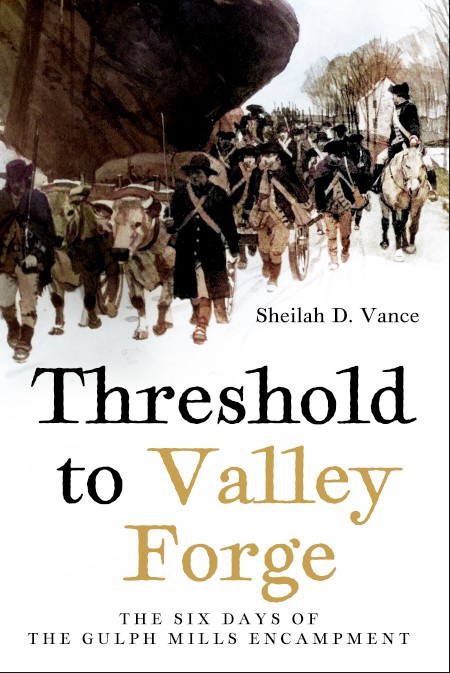
For more information on The Threshold Framework and its genesis, see my book, Threshold to Valley Forge: The Six Days of the Gulph Mills Encampment.
Until next time,
Sheilah


Leave a Reply