By Sheilah Vance
In December 1777, the future of the American Revolution looked uncertain.
British forces had captured Philadelphia. The Continental Army was exhausted, undersupplied, and under enormous pressure. Many believed the Revolution might not survive the winter.
Just outside Philadelphia, near a small area called Gulph Mills, the army paused for six days—December 12 to 18–before moving to Valley Forge.
History remembers Valley Forge as a story of endurance and transformation. But the leadership decisions that made that transformation possible occurred earlier—during those six days of uncertainty.
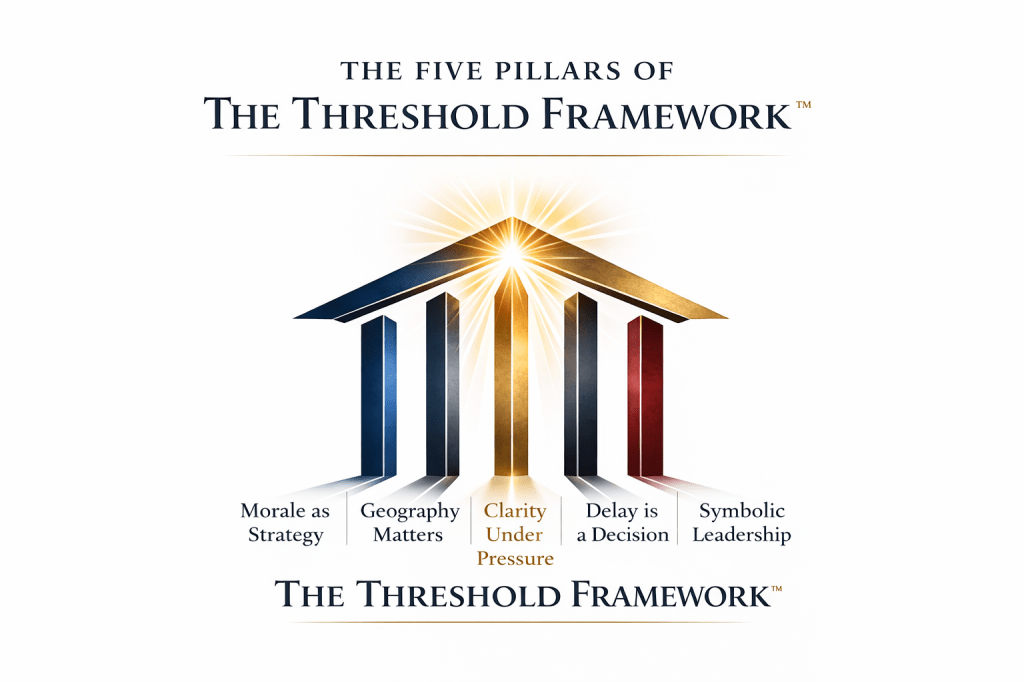
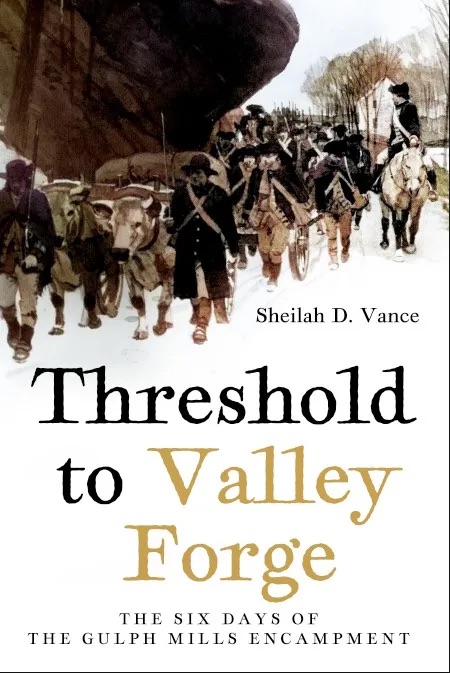
From studying this moment for my book, Threshold to Valley Forge: The Six Days of the Gulph Mills Encampment, I developed what I call The Threshold Framework™, a leadership model for navigating pressure, uncertainty, and institutional change.
The framework is based on five principles that remain deeply relevant today for anyone leading through challenge.
1. Clarity Under Pressure
Crisis creates noise.
Too many problems.
Too many voices.
Too many competing priorities.
Leaders often become overwhelmed trying to solve everything at once.
At Gulph Mills, George Washington faced countless problems: lack of supplies, declining morale, political pressure, and uncertainty about the army’s future.
But he understood something essential.
He could not solve everything immediately.
Instead, he focused on one critical objective:
The army must survive intact.
That clarity shaped every decision that followed.
Modern leaders face the same challenge. In moments of uncertainty, leadership begins by answering a simple question:
What must not fail?
2. Morale Is Strategy
Morale is often treated as secondary to strategy.
In reality, it is part of strategy.
At Gulph Mills and later at Valley Forge, soldiers faced hunger, exhaustion, and fear. Washington could not immediately eliminate those hardships, but he maintained visible steadiness and purpose.
That mattered.
People take emotional cues from leadership. When leaders disappear, remain silent, or project panic, uncertainty spreads quickly.
Organizations function best when people believe the institution still has direction and purpose.
Morale influences:
- performance
- trust
- resilience
- decision-making
In difficult moments, communication is not optional. It is leadership.
3. Geography Matters
The movement toward Valley Forge was not random.
Washington selected terrain that offered strategic advantages:
- defensibility
- access to supply routes
- protection from direct attack
Good leadership requires understanding the terrain.
Today, “terrain” means more than geography. It includes:
- organizational structure
- market position
- public perception
- economic conditions
- institutional strengths and vulnerabilities
Leaders who fail to understand their environment make poor decisions—even with good intentions.
The strongest leaders understand where they are exposed and where they are strongest.
4. Delay Is a Decision
One of the most dangerous illusions in leadership is the belief that waiting is neutral.
It is not.
At Gulph Mills, remaining stationary increased the army’s vulnerability with each passing day. Movement carried risk—but waiting carried greater risk.
Modern organizations face similar realities.
Leaders often delay difficult decisions because action feels uncomfortable or uncertain. But delay itself carries consequences:
- opportunities disappear
- confidence erodes
- problems deepen
- competitors advance
Inaction is not the absence of decision-making.
It is a form of decision-making.
5. Symbolic Leadership
Valley Forge became more than a military encampment. It became a symbol of perseverance.
That symbolism mattered because people are shaped by stories.
Leaders communicate constantly—not only through policies and speeches, but through visible actions.
People watch:
- where leaders stand
- what leaders prioritize
- what leaders repeat
- what leaders ignore
In times of uncertainty, organizations create internal narratives.
The question leaders must ask is:
What story are people telling themselves right now?
The answer often determines whether institutions endure.
Leadership at the Threshold
The six days at Gulph Mills remind us that leadership is tested most severely in moments of uncertainty.
The greatest leadership decisions are rarely made when conditions are comfortable or clear. They are made at the threshold—when pressure is high, risks are real, and the path forward is uncertain.
Every organization, community, and institution eventually reaches such a moment.
At that point, leadership matters most.
Because the future is often shaped not simply by crisis itself—but by the decisions leaders make just before transformation begins.
Closing Thought
Every institution eventually reaches a threshold moment.
Leadership determines what happens next.
If you would like more information about The Threshold Framework and how it can help you and others in your organization lead, please contact me at svanceauthor@gmail.com.


Leave a Reply