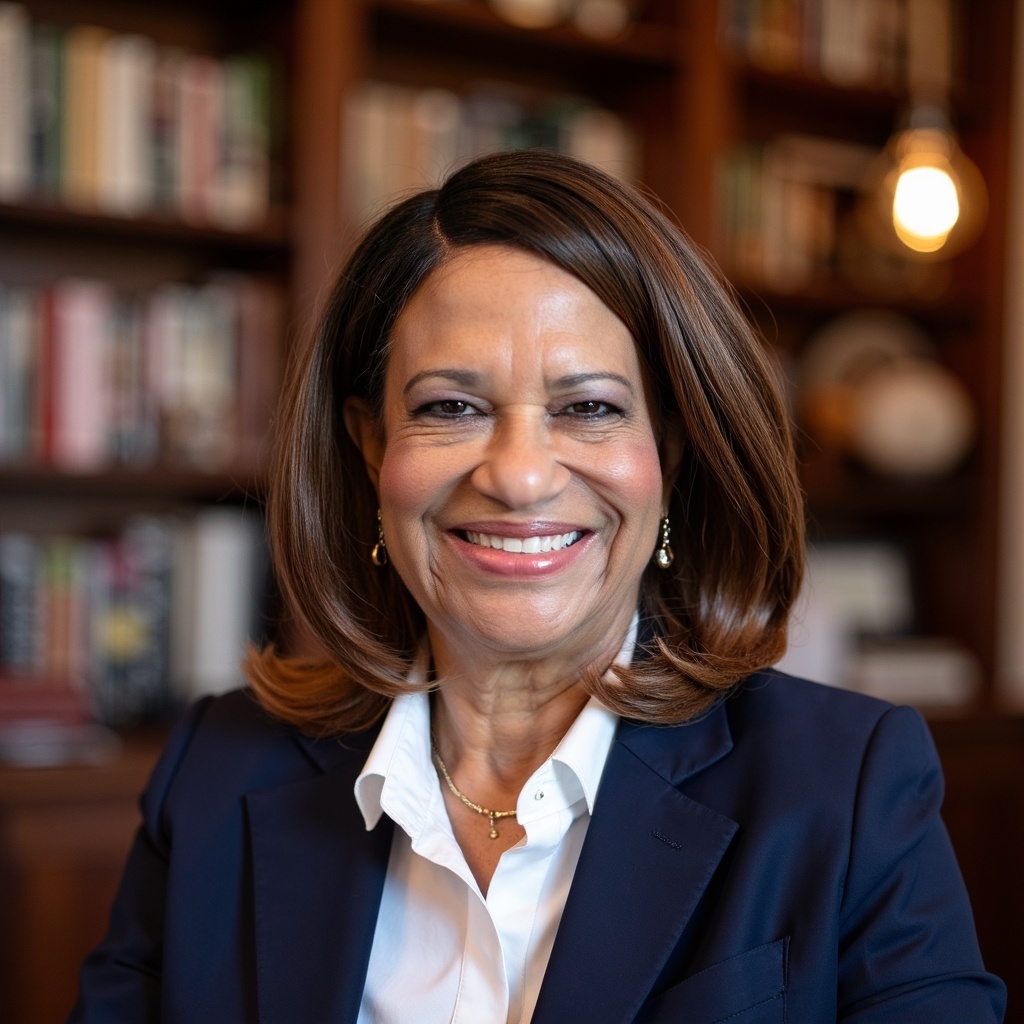
By Sheilah Vance
On March 28, millions of people in the United States will mark and rally around No Kings Day—a moment to reflect on a foundational truth of the American experiment: this nation was born from a conscious rejection of absolute power.
It is easy, in the comfort of the present, to treat that idea as inevitable. It was anything but.
There was a moment—fragile, uncertain, and cold—when the future of the United States hung in the balance. That moment was not only at Valley Forge itself, but in the days just before it, at a place that is called the Threshold to Valley Forge: the Gulph Mills Encampment of December 12 to 19, 1777. See my book, Threshold to Valley Forge: The Six Days of the Gulph Mills Encampment.
The Threshold Moment We Rarely Talk About
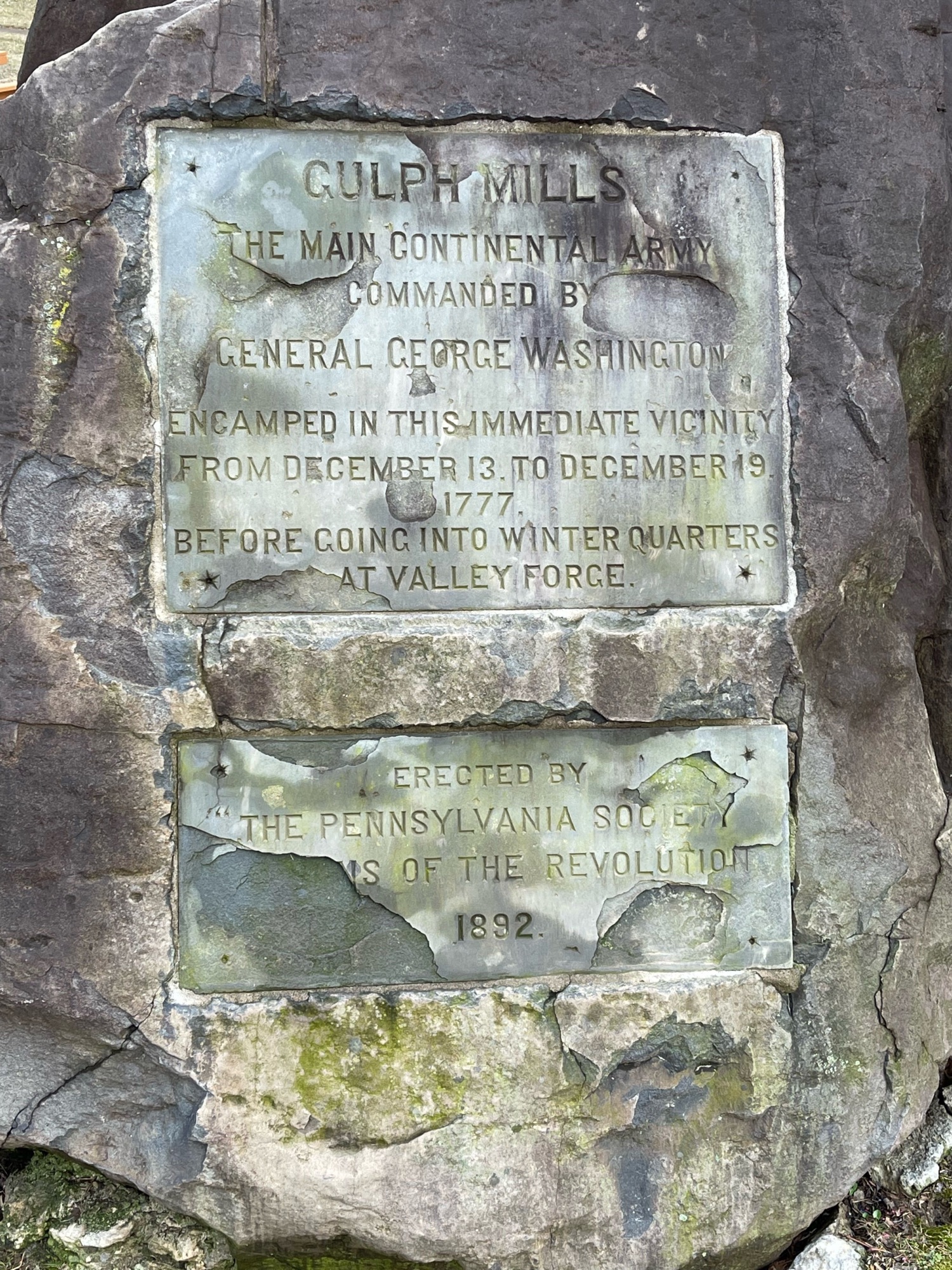
History often remembers Valley Forge as a place of endurance—and it was. But before the huts were built, before the army settled into its winter quarters, there was a decision point.
General George Washington and about the Continental Army marched into Gulph Mills, about 15 miles from center city Philadelphia, on December 12, 1777, while they stood at literal and symbolic threshold. They had just fought the British, who were lodged in Philadelphia, the new nation’s capital, after taking it in September 1777 with nary a shot fired. They had skirmished with the British on December 5 – 8 at the Battle of Whitemarsh, a battle that Washington thought would be a full on battle between his full army and the full British army, before the British unexpectedly retreated to their Philadephia headquarters. Washington absolutely knew then that he had to put more distance between his army, which had encamped at Whitemarsh, about 15 miles from Philadelphia, in the six weeks after the Battle of Germantown on October 4, and the British. On December 11, the Continental Army started crossing over the Schuylkill River a few miles away at the Matson’s Ford, but the army was suprised to encounter a few thousand British soldiers on the high hills of Gulph Mills, part of the Conshohocken Hills. Several regiments skirmished with the British in what is called the Battle of Matson’s Ford. Some 800 soldiers who had crossed over a rickety bridge they build at the Matson’s Ford into Gulph Mills retreated back over the Schuylkill River to wait as Washington gathered intelligence to dedtermine if the whole British army was out for one last battle before the armies went into winter quarters, where they would rest and regroup before emerging to fight in the spring, or whether it was a large British foraging party out searching for food and supplies. Washington determined that it was a large foraging party, but he moved his army further west on the Schuylkill to cross at the Swedes Ford the next day.
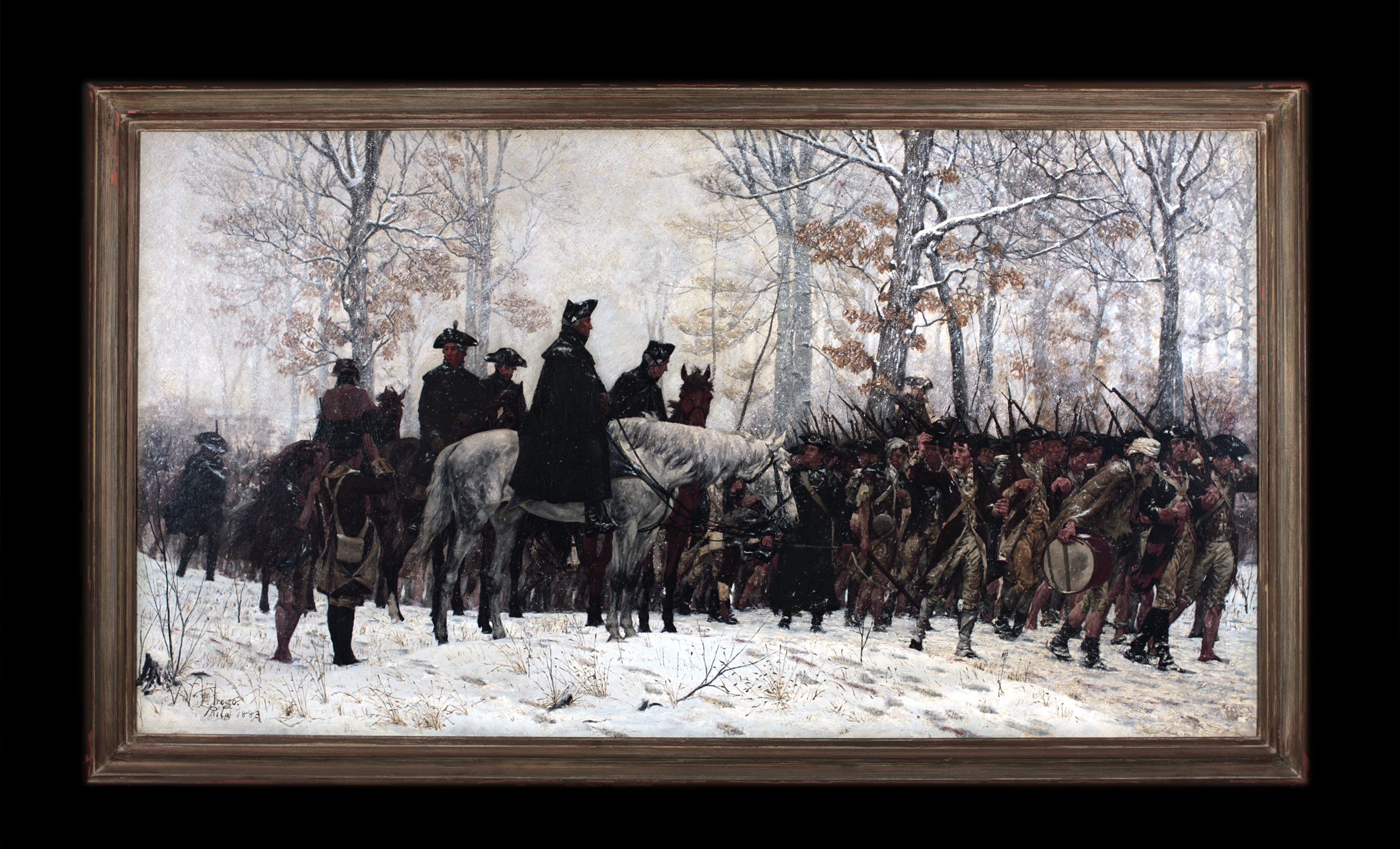
The army was exhausted. Ill-equipped. Undersupplied. Many soldiers were half-naked and barefoot. Hunger and disease loomed. Enlistments were expiring. The revolutionary cause itself seemed perilously close to collapse.
The Continental Congress, which was in exile in York, PA after fleeing Philadephia when the British approached, wondered if Washington was the right man to lead the Continental Army. Washington had a string of defeats in the Philadelphia Campaign, starting in Spetmber 11, 1777 with the Battle of Brandywine, leading to the Battle of Paoli in late September, and the Battle of Germantown in early October, while General Horatio Gates successfully captured 5000 British soldiers at the Battle of Saratoga in early October. The Pennsylvania General Assembly, in exile in Lancaster, PA, wondered how it would be able to protect its citizens with the British armty in Philadephia, and how it would be able to support the Continental Army, wihch it was conivenced would take up winter quarters in Pennsylvania. Meanwhile, over in France, Ben Franklin, the US’ most famous citizen, was with two colleagues called the American Commissioners, on a mission from the Continental Congress to convince the French King, Louis XVI, to enter the war in support of the new United States formally and diplomatically.
And hovering over all of it was a question that does not get asked enough:
Would this fragile rebellion hold—or would the gravitational pull of monarchy reassert itself?
Why “No Kings” Was Not Guaranteed
The idea that America would reject kingship feels obvious now. In 1777, it was radical—and uncertain.
The soldiers at Gulph Mills were not simply fighting an external enemy. They were resisting a political structure that had defined the world for centuries. Monarchy was not an abstraction; it was the default.
To choose “no king” was to step into the unknown.
And that choice came at a cost.
The Cost of Refusal
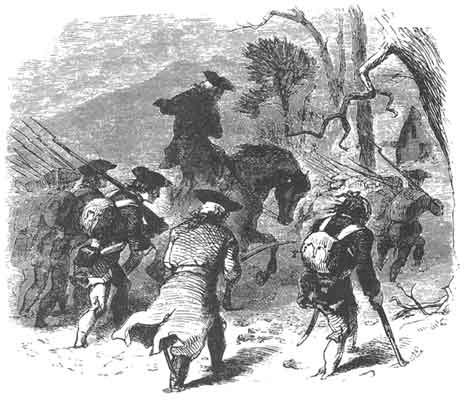
At Gulph Mills, the army could have fractured. Soldiers could have walked away. Leadership could have faltered. The cause could have quietly dissolved back into the familiar structure of British rule.
Instead, they chose to continue.
They chose to cross the threshold.
On December 19, Washington led his army out of Gulph Mills and some seven miles down the road into Valley Forge for winter quarters.
They chose to endure what came next at Valley Forge—cold, hunger, illness, and uncertainty—not because victory was guaranteed, but because the principle was worth the sacrifice.
That principle was simple, but profound:
No king would rule this new nation.
The Leadership Lesson of the Threshold
In my work on The Threshold Framework, I describe moments like Gulph Mills as threshold decisions—points at which leaders and institutions must choose whether to retreat to the familiar or step forward into risk, purpose, and transformation.
No Kings Day is not just a commemoration of an outcome. It is a recognition of a decision.
At Gulph Mills, there was no assurance that the Continental Army would survive the winter. There was no certainty that independence would be achieved. There was only a choice:
Return to the known world of monarchy or endure the unknown in pursuit of something unprecedented.
That is the essence of leadership.
What No Kings Day Asks of Us
No Kings Day should not be a passive remembrance. It should be an active question for all of us, no matter what our political party is:
What are we willing to endure to preserve what was built at such cost?
The soldiers at the Threshold to Valley Forge did not benefit from the system they were securing. They sacrificed for a future they would not fully see.
That is the true meaning of No Kings.
It is not simply the absence of a monarch. It is the presence of responsibility—shared, demanding, and ongoing.
Crossing Our Own Thresholds
Every generation faces its own Gulph Mills moment.
A moment when the path forward is unclear.
When the cost feels high.
When retreat to the familiar is tempting.
And in those moments, the question is the same:
Will we cross the threshold?
On March 28, as millions of Americans mark No Kings Day, we would do well to remember that the rejection of kingship was not secured in a declaration alone.
It was secured in the snow.
In the suffering.
In the decision to continue.
At Gulph Mills, they chose to move forward—into hardship, into uncertainty, into history.
And because they did, we inherited a nation built not on the power of a king, but on the courage of those willing to refuse one.
On this No Kings Day, please join me as I speak to the Lehigh County Historical Society at 1 pm at the Lehigh County Heritage Museum, 432 West Walnut Street, Allentown, PA. Registration details are Events at Lehigh County Historical Society.
And you can see more information about the Threshold to Valley Forge and my other upcoming events at my website, http://www.thresholdtovalleyforge.com, or click here.
I hope to see you in Lehigh County or at other upcoming events coming up soon.

Best,
Sheilah


Leave a comment