I was sick on and off all month, but I couldn’t let Black Histoy Month end without making this post because, I could not write my book, Threshold to Valley Forge: The Six Days of the Gulph Mills Encampment, without writing about the African Americans who lived in Gulph Mills in December 12 – 19, 1777, during the Gulph Mills Encampment, and the soldiers and other African Americans who spent those six days in Gulph Mills with the other members of the Continental Army.
It could be because I am a descendant of enslaved people, the closest in my lineage being my great grandmother and great grandfather. It wasn’t that long ago. Or, it could be because the great hypocrisy of the Revolutionary War is that it was a war for freedom for some, but not for others.
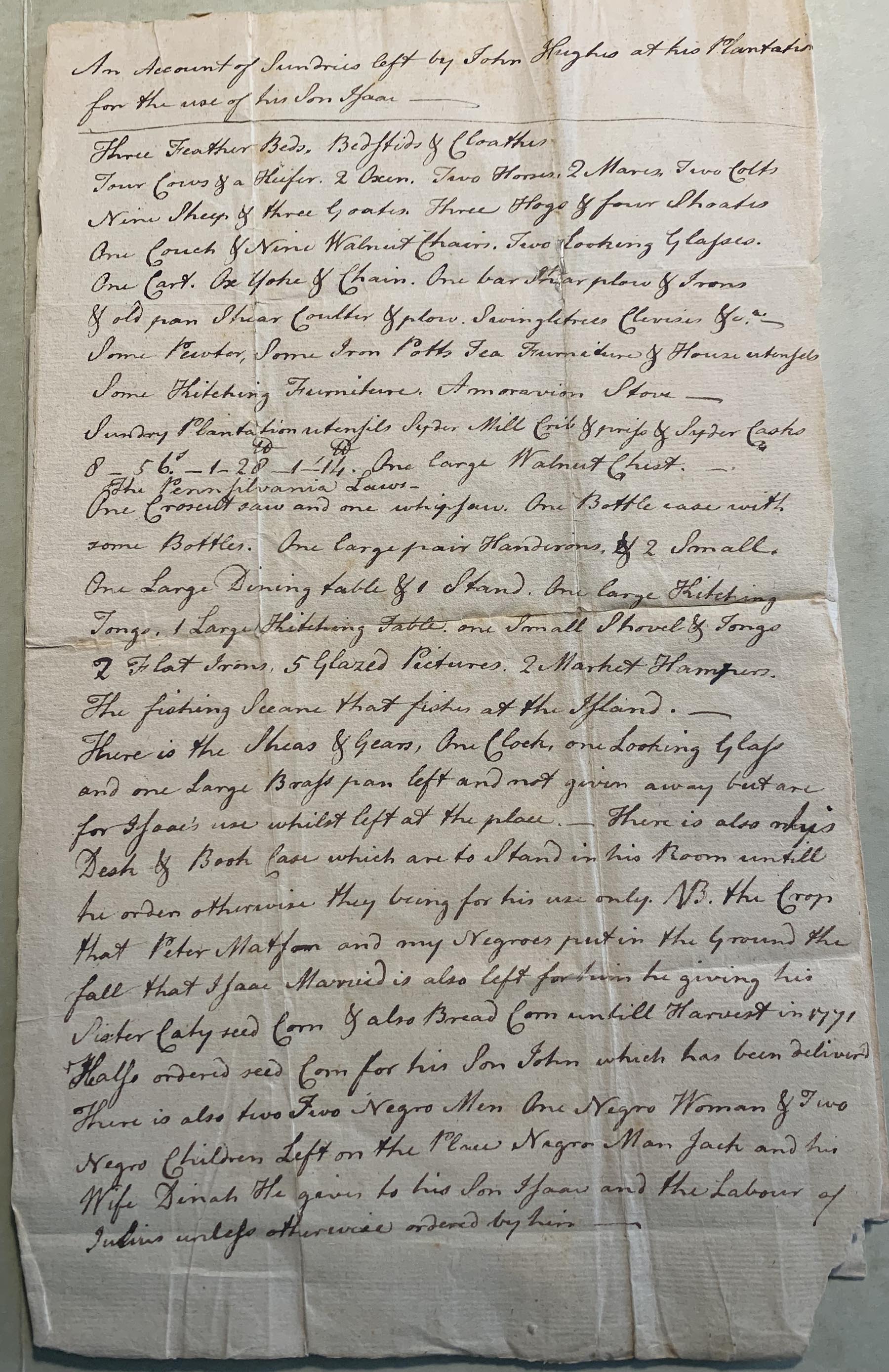
Either way, both free and enslaved African Americans were at the Gulph Mills Encampment (GME). Slavery was legal in all 13 colonies during the GME. There were numerous enslaved people in Gulph Mills at that time, working the farms/plantations of white residents, many of whom fought in the Continental Arrmy and otherwise supported the war for independence. Lt. Col. Isaac Hughes and his father, John Hughes, whose family homes are among those thought to be where General George Washington stayed during the GME, enslaved numerous people. Those people never were given the dignity of a last name, but their first names, that I could find, were Jack and his wife Dinah, Catherine, Peter, Harriott, and “a Negro boy Pompey.” Other members of the Continental Amy bought their enslaved people with them, including George Washington, whose enslaved person, Billy Lee, was always at his side. Pennsylvania’s General James Potter had the enslaved person named Hero Wade with him. Virginia’s General George Weedon, “had a number of private baggage wagons, conducted by his own slaves.” Weedon is reported to have “treated the soldiers under him with the utmost cruelty and tyranny, viewing them more in the capacity of his negro slaves.”
There were documented free African Americans at Valley Forge. General James Varnum’s Rhode Island Continental Army brigades included free African Americans like William and Ben Frank of the 2md Rhode Island regiment. Varnum’s Strength Return of December 15, 1777 is the only one that I, and seemingly any other reseacher, has found that shows the number of soldiers in a general’s brigade at Gulph Mills. It is in my book.
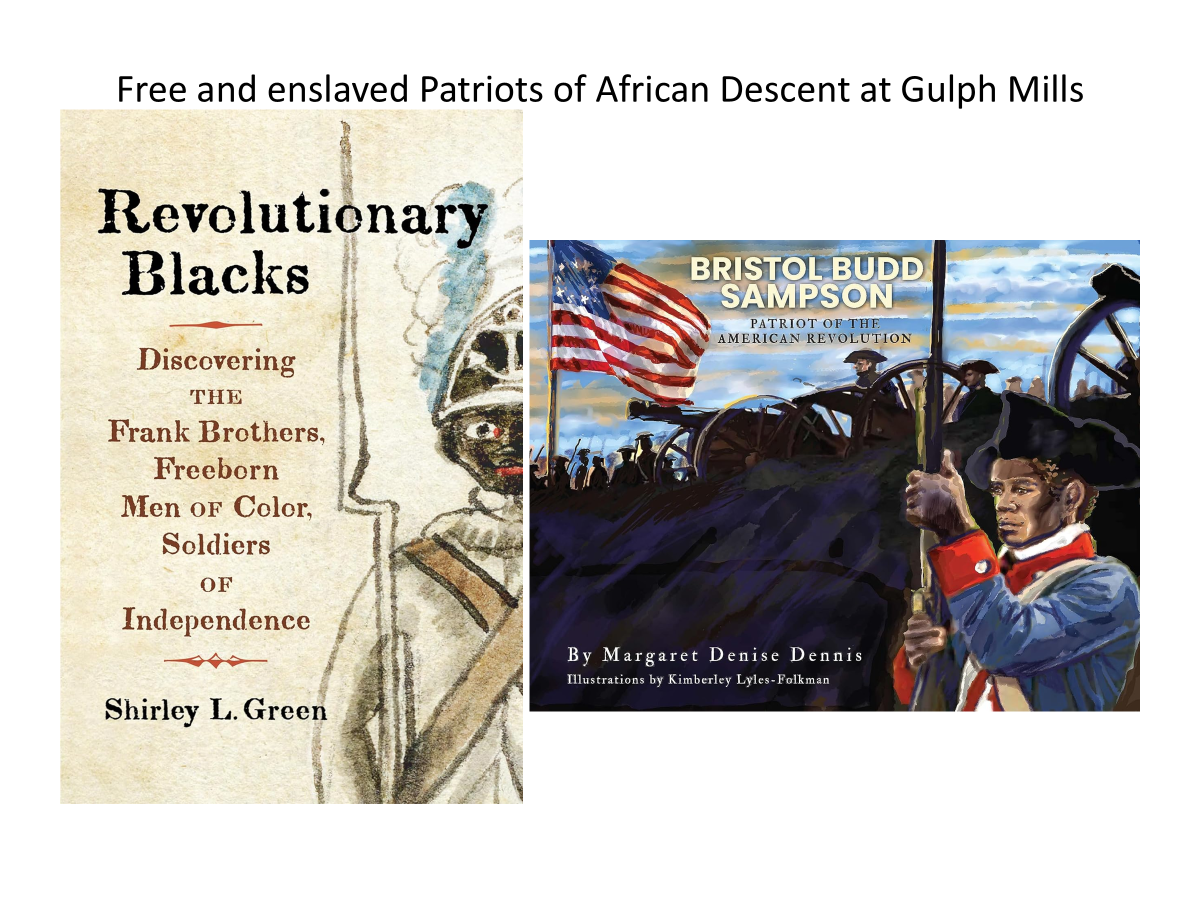
The Massachusetts and Connecticut lines also had a number of free African Americans. They included Bristol Budd Sampson and Prince Perkins, also known as Prince Negro, in the Connecticut Line. See these wonderful books below by descendant of these patriots, Shirley L. Green and Margaret Denise Dennis.
Other enslaved African Americans were forced to go to war with their enslavers or in place of them because their enslavers did not want to go and fight themselves.
For the first few years of the Revolutionary War, Washington opposed the enlistment of African Americans in the Continental Arrmy, especially enslaved people, who enslavers believed would turn their guns on their enslavers to secure their freedom. Yet, when the Continental Army desperately needed soldiers in early 1778, Washington relented and allowed African Americans to enlist. This was at the vigorous suggestion of General Varnum when Rhode Island could not fill its quota of soldiers to send to the Continental Army based on free white men alone. The Rhode Island legislature agreed that enslaved persons could enlist, the state would purchase their freedom from their enslavers, and the state would seek reimbursement from Congress for those costs.
Other African Americans at Gulph Mills included Agrippa Hiull, orderly to General John Paterson of the Massachusetts Line.
Many African American soldiers fought also for the freedom of enslaved African Americans in hope that their military service for their country would convince their white enslavers that African Americans should be free, too. Yet, the country that these men fought for did not end slavery until the Encamcipation Proclamaiton of 1863 and the 13th Amendment to the US Constitution in 1865.
We continue to work toward that “more perfect union.”
Peace–
Sheilah
.


Leave a comment